★★★★☆4.3(51 reviews)
Boot Scootin Boogie Cowboy Boots Design Review
Real-World Performance in Embroidery Projects
- Custom Apparel: This design shines on cotton or cotton-blend t-shirts and sweatshirts. The bold colors and defined lines stitch cleanly and maintain their shape without distortion.
- Tote Bags: On woven tote fabric, the boots look sharp and professional. However, keep in mind that tote bags often endure frequent use and washing—this design may show signs of wear over time depending on thread quality and stabilizer choice.
- Baby Clothes: Use with caution. The high-contrast colors and dynamic shapes may overwhelm delicate baby garments unless softened with a smaller scale and more muted thread options.
- Aprons & Patches: The boots work great on sturdy aprons and as part of an **embroidered patch**. Their size and structure allow them to stand out while still being manageable in hoop space.
- Caps and Hats: The curved surface of a cap presents challenges. Unless you’re using a flat back **applique design** or a curved embroidery file, expect some stretching or misalignment.
- Kitchen Towels and Tea Towels: These are excellent candidates for adding a touch of humor and style. The **stitch density** should be reviewed carefully to avoid puckering on thin or loosely woven fabrics.
- Etsy Listings and Boutique Merchandise: As a **digital embroidery file**, it brings a unique charm to handmade products. It’s versatile enough for both personal and commercial projects, making it a solid addition to a **craft business**’s design library.
Where to Use with Caution
- Small Hoop Sizes: The boots are fairly large and detailed. Attempting to fit them into a small hoop might result in lost details or poor stitch flow.
- Textured Fabrics: If you plan to embroider this on denim or canvas, the texture will influence how the stitches lay. You may need to adjust **stabilizer** types or pre-wash the fabric to prevent shrinkage-related issues.
- Stretchy or Thin Fabrics: Stretchy materials like spandex or lightweight knits could cause the design to pucker or distort during stitching. Always test on a scrap piece before finalizing the placement.
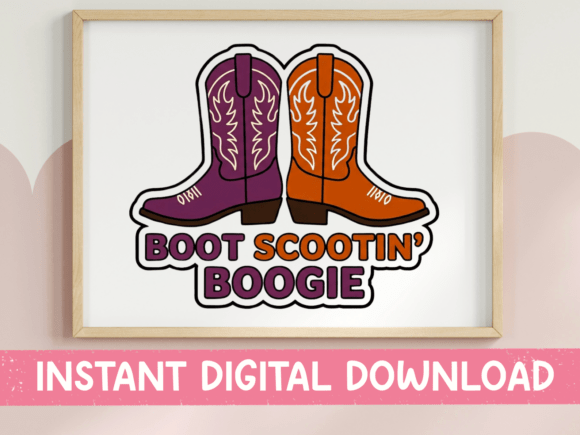
- Dark Fabric Backgrounds: The deep purple and bright orange pop on light backgrounds, but on darker ones, the visibility drops. Consider using a white or cream-colored base for best results.
- Detailed Corners and Dense Stitch Areas: The inner parts of the boots have lots of **fill stitch** and satin stitch. If you’re using a lower-end machine, these areas might require manual adjustments or a slower stitch speed to prevent skipping.
- Layered Garments: For items like hoodies or jackets, ensure the design is placed on a single layer. Sticking it through multiple layers can lead to uneven stitching or loss of detail.
Designer Notes: Practical Tips Before Stitching
- Test on Scrap Fabric First: Especially if you’re new to the design or using a new machine setup. This helps identify potential issues with **hoop size**, **stabilizer**, and **thread tension**.
- Check Thread Color Contrast: Make sure the white stitching doesn’t blend into the background fabric. Sometimes, adjusting to a slightly off-white or metallic thread can enhance visibility.
- Review Stitch Density: Look at the **fill stitch** areas and **satin stitch** sections. If the design feels too dense for your material, you may want to dilute it slightly to avoid puckering or fabric damage.
- Confirm Hoop Size Requirements: Without exact numbers provided, always assume it needs a medium to large hoop. Avoid cramming it into a tight space unless you're prepared to edit the file.
- Inspect Small Details: The boots feature fine outlines and decorative accents. These are easy to miss if the embroidery machine isn’t properly calibrated or if the fabric is too stretchy.
- Use Proper Stabilizer: A tear-away or cut-away stabilizer is essential here. The combination of **running stitch** and **fill stitch** requires support to maintain shape and integrity.
- Test in Black and White Mockups: This will help you see how the design would appear in grayscale, useful for clients who prefer monochrome or low-visibility thread colors.
- Compare Light and Dark Fabric Backgrounds: The design is most effective on light-toned fabrics. Try to visualize how it might look on darker materials before committing.
- Check Licensing Terms: If you're planning to sell the **finished product** or offer it as a **digital embroidery file**, confirm the licensing allows for commercial use. Otherwise, you risk legal complications later.
⬇️ Download Free
Free download · No sign-up required
🔗 You Might Also Like
T-Shirt Designs
Embroidery designs can make or break a project, especially when it comes to crea...
T-Shirt Designs
As an embroidery designer who has spent years evaluating machine embroidery desi...
T-Shirt Designs
As an experienced embroidery designer and product reviewer, I always approach a ...
T-Shirt Designs
Embroidery design reviews are more than just checking file formats or stitch cou...
T-Shirt Designs
First Impressions and Design Personality The Lucky Cowboy Howdy St Patrick’s Day...
