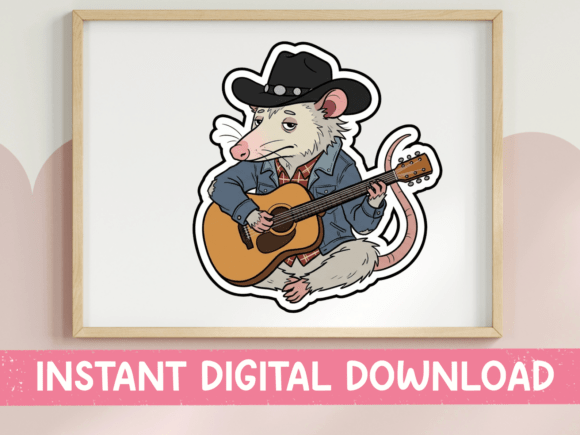
Country Opossum Guitar Player Design Review
When evaluating a new machine embroidery design, I look for more than just visual appeal—I consider how it will translate into real-world projects, from custom apparel to personalized gifts. The Country Opossum Guitar Player Design caught my eye with its quirky charm and folksy theme. Let’s dive into what this embroidery file brings to the table and where it shines—or doesn’t.
First Impressions: A Whimsical Country Vibe
The Country Opossum Guitar Player Design is delightfully offbeat. It features an opossum in full country musician regalia—black cowboy hat, denim jacket, and strumming an acoustic guitar. The layout is centered, with the character positioned in a way that feels natural on a garment or fabric piece. The details are expressive but not overly complex, which is a good sign for stitchability.
This design has a clear personality: fun, lighthearted, and a touch irreverent. It screams “handmade product” with a sense of humor that would resonate well in niche markets like Etsy sellers or boutique branding. It’s the kind of design that could easily become a signature element for a craft business specializing in novelty items or regional-themed products.
Real-Life Application: Where This Design Fits Best
I can see this design working exceptionally well as a tote bag design. The central positioning and scale of the opossum make it perfect for front-facing embroidery, especially if you're aiming for a bold statement piece. On a sweatshirt, it would add a playful twist without overwhelming the viewer. For small shop products like aprons or pillow covers, the folksy vibe aligns perfectly with the aesthetic.
If you’re an Etsy seller or run a handmade shop, this could be a standout item during holiday seasons or for themed events. Its charm makes it suitable for personalized gifts, such as embroidered baby clothes or nursery decor, particularly if the recipient enjoys quirky animal motifs. As a custom apparel option, it would work great on unisex tees or as part of a seasonal collection.
Design Assets and Digital Embroidery Files
As a designer who frequently works with digital embroidery files, I appreciate when a design feels cohesive and ready for use. The Country Opossum Guitar Player Design does this well—it reads like a complete scene rather than a collection of elements. It’s easy to imagine stitching it out and having it look just as lively on fabric as it does on screen.
For those creating printable mockups or previewing designs for clients, this graphic offers a strong visual identity. It's detailed enough to stand out, yet simple enough to avoid overcomplicating the overall look of the finished product.
Stitch Quality and Technical Considerations
One thing to note is that while the design looks great visually, it includes several layers—especially around the hat, jacket, and guitar. These areas may require careful attention to stabilizer type and tension settings. I recommend testing the design on scrap fabric first to assess how each layer behaves, especially if you plan to embroider on stretchy or thin material.
The thread colors used in the design are traditional and blend well within the folksy style. However, they may not pop as much on dark fabrics. If you’re using this on black or navy backgrounds, consider adjusting the color palette for better visibility. Also, keep an eye on stitch density—dense areas like the denim jacket might need extra stabilizing to prevent puckering or distortion.
Hoop Size and Fabric Texture
Ideally, this design should be stitched in a larger hoop size to allow room for the full expression of the character and his instruments. While it can technically fit into smaller hoops, the detail in the face and hands may get lost, reducing the impact of the embroidery project. If you must use it in a compact space, simplify the design by removing non-essential fill stitches or resizing carefully to maintain clarity.
Fabric texture also plays a role here. Smooth cotton blends or quilting cotton will give the best results. Textured materials like canvas or flannel may cause some of the finer lines to appear less crisp. Always test on your intended fabric before going full-scale with client orders or commercial embroidery runs.
Customer Reactions and Market Fit
From a customer perspective, this design is highly engaging. It tells a story, and people love that. As someone who regularly handles buyer engagement for handmade shops, I know that designs with character tend to perform better. The Country Opossum Guitar Player Design fits right into that category. It’s not only cute but carries a sense of humor that many buyers find appealing.
It’s versatile enough for both personal and commercial embroidery purposes. As a holiday gift idea, it could be embroidered onto a cozy blanket or a decorative pillow. For a craft fair product, it adds instant recognition and memorability—key factors in standing out among competitors.
Visual Appeal and Brand Consistency
Visually, this design enhances the product value significantly. It gives a handmade feel that customers often associate with quality and authenticity. If your brand leans toward folk art, Americana, or even Southern-style humor, this could be a perfect match for your design assets.
However, if your brand is more minimalist or professional, this design might not align with your overall brand consistency. But that’s okay—this isn’t a one-size-fits-all embroidery file, and knowing where it fits best is part of the designer’s job.
Where Caution Is Advised
While the Country Opossum Guitar Player Design is charming and functional, there are certain applications where it needs to be handled with care:
- Small hoop sizes: The design loses its visual punch when scaled down too much.
- Textured or stretchy fabrics: These can distort the fine lines and facial expressions.
- Dark fabric backgrounds: Thread contrast may suffer unless adjusted beforehand.
- Curved surfaces: The layout is best suited for flat areas; curved stitching may compromise the shape.
- Detailed corners: Watch for tight curves and intricate edges—they may require manual adjustments.
- Tiny lettering: Not present in this design, but similar ones might benefit from pre-testing.
- Products needing frequent washing: High-density areas may pill or fade faster without proper thread choice.
Practical Designer Notes
Before finalizing any project using the Country Opossum Guitar Player Design, I suggest the following:
- Test on scrap fabric to evaluate stitch behavior and fabric compatibility.
- Check thread color contrast against your chosen background for optimal visibility.
- Review stitch density in high-detail areas to ensure smoothness and durability.
- Confirm hoop size requirements based on your machine and fabric thickness.
- Inspect small details, such as the eyes or guitar strings, for accuracy and stitch integrity.
- Use proper stabilizer—cutaway or tear-away depending on fabric and design complexity.
- Test in black and white mockups to see how it translates across different color schemes.
- Compare light and dark fabric backgrounds to understand how the design interacts with each.
- Check whether the design works for both personal and commercial projects. Some designs have restrictions—always confirm licensing terms before selling finished items or digital products.
Final Thoughts for Creative Entrepreneurs
In summary, the Country Opossum Guitar Player Design is a solid addition to any embroidery project that benefits from a bit of whimsy and charm. It’s not the kind of design that will suit every market, but for those targeting folksy, humorous, or novelty-themed products, it hits all the right notes.
As a seasoned reviewer and designer, I’d say this design is best suited for custom apparel, handmade products, and holiday gifts—anything where a little character can go a long way. Just remember to adapt it to your specific project needs, test thoroughly, and choose the right fabric and thread combinations to bring out its full potential.
If you're an embroidery designer, craft business owner, or small shop product creator, this design can help elevate your offerings. But always take time to understand how it performs in your unique setup. After all, the magic happens when creativity meets technical precision.